
The Beautiful Game’s Oldest Friendship: Why Scotland vs Brazil is a Family Reunion
The Beautiful Game’s Oldest Friendship: Why Scotland vs Brazil is a Family Reunion
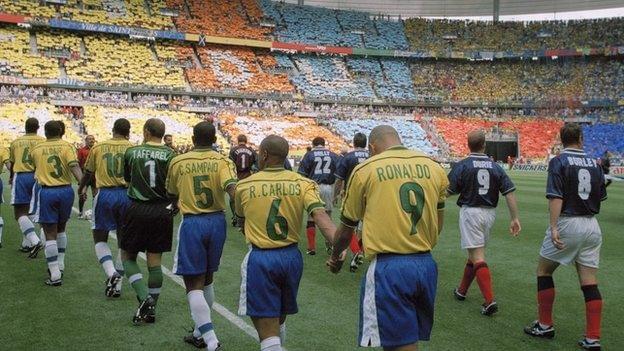
When Scotland walk out to face Brazil tonight, commentators will inevitably frame the match as a classic David and Goliath encounter. They will dissect the tactical systems of modern European football and compare them to the flair of South American superstars. Yet, if you look past the modern stadium lights and the billion pound commercial spectacle, you find a story that is far more intimate. Tonight is not a meeting of strangers: it is a reunion of two old friends.
1. The Founding Fathers of Rio
Consider Thomas Donohoe, the Renfrewshire textile worker who is proudly remembered in South America as a founding father of the sport. When he arrived in Rio de Janeiro in 1894, he discovered a nation completely unacquainted with the game.
It was his wife, Elizabeth, who brought the first proper leather ball over from Scotland, allowing him to organise the first match on Brazilian soil.
Crucially, Donohoe introduced the egalitarian spirit of Scottish football. The club he helped establish, Bangu Atlético, became a pioneer for racial integration, opening the sport to working class and Black players when the local elite tried to keep it exclusive.
2. The Architect of São Paulo
At the exact same time in São Paulo, Charles Miller was busy setting up Brazil's very first official league. The son of an Ayrshire railway engineer, Miller arrived from his studies with two footballs and a rulebook, effectively establishing the structural and competitive foundations of the Brazilian game.
The connection, however, runs even deeper than simply introducing the physical ball. The very soul of Brazilian football, the fluid passing style known globally as joga bonito, was coached into existence by the legendary Scotch Professors.
3. The Scotch Professors and Joga Bonito
In 1912, Paisley born engineer Archie McLean arrived in São Paulo. Frustrated by the crude kick and rush style common at the time, he introduced the intricate, quick, one two passing sequences he had learned back home.
The locals fell in love with it, calling it tabelinha, meaning little table, and it became the fundamental DNA of Brazilian football. Alongside him was Jock Hamilton from Ayr, who became one of the country's first professional coaches, bringing modern physical preparation to the clubs.
The Global Family
When the referee blows the whistle tonight, we are not just watching a standard international fixture. We are watching a conversation between the architects and the masters.
Brazil may have won five World Cups, but the blueprint was drawn in places like Busby, Paisley, and Ayr. As the players take the field, the spirits of Donohoe, Miller, and McLean will be watching, smiling at the global family they helped build.