
Scotland's growth ambitions start with what our leaders tolerate
Scotland's growth ambitions start with what our leaders tolerate
By Colin McGill, Founder and Managing Director, Avastra Consulting
Most businesses don't stall for lack of strategy. They stall because of what has quietly become acceptable, argues Glasgow consultant Colin McGill.
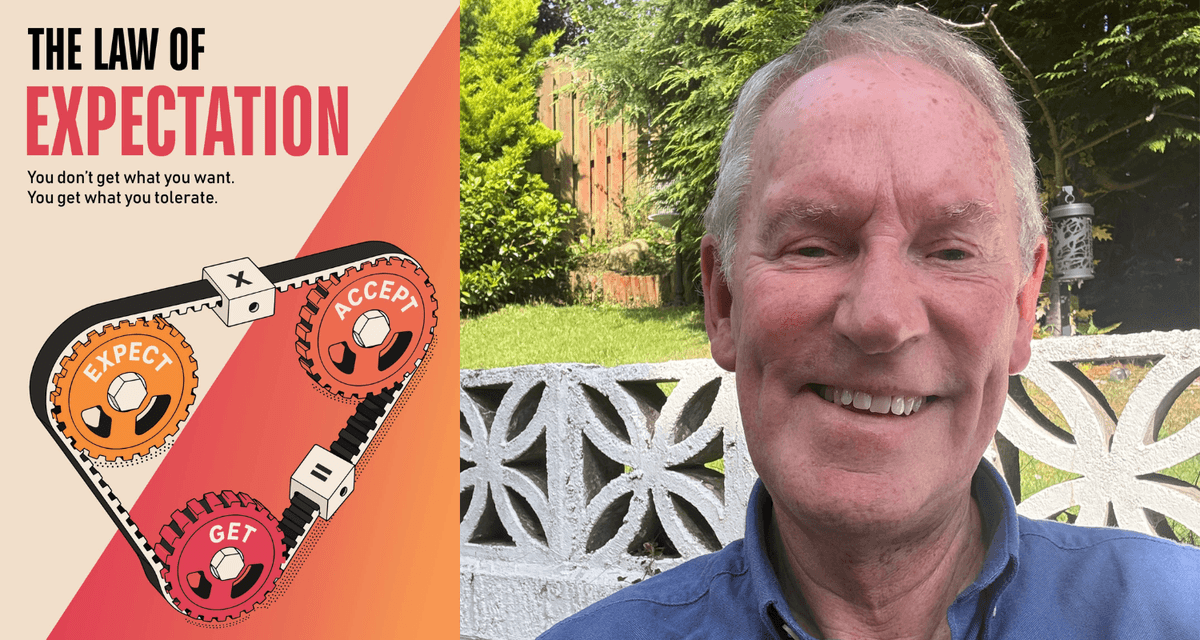
After decades working with managing directors in manufacturing, industrial services, hire, distribution and professional services, I have come to a simple conclusion. Businesses don't get what they want. They get what they tolerate.
I call it The Law of Expectation, and it fits on one line:
What you EXPECT × What you ACCEPT = What you GET.
The multiplication sign matters. Most leaders are good at the first half. They set targets, write strategies and describe the future with real conviction. Where things unravel is the second half. Every late report that goes unchallenged, every missed deadline that is explained away, every meeting that ends without a decision is a small act of acceptance. Each one quietly resets the standard. Multiply a high expectation by a low acceptance and the result is always lower than anyone planned.
The gap nobody talks about
In almost every business I walk into, the leadership team can describe exactly where they want to be. Ask them what they have stopped noticing, and the room goes quiet.
That is because acceptance is rarely a decision. It builds up slowly. A capable manager is stretched, so a few things slip. The MD steps in to fix them, because it is quicker. A month later, the MD is fixing them every week. A year later, the business can't function without the MD in the room, and everyone has forgotten that it was ever different.
I call this the Dependency Trap, and it is one of the most common reasons good Scottish businesses hit a ceiling. The owner becomes the bottleneck for every important decision. Growth stalls, not because the market has dried up, but because the business can only move as fast as one person can think.
Why this matters for Scotland
Our economy is built on businesses of 15 to 500 people. They are the engineering firms, the contractors, the hauliers, the specialist manufacturers and the professional practices that employ most of the workforce outside the cities. Many are founder-led. Many are approaching succession. A great many carry far more weight on the shoulders of one or two people than they would ever admit.
When those businesses grow, Scotland grows. When they plateau, so does a large part of the economy. Helping them break through is not just a matter of finance or skills funding, important as those are. It is a matter of leadership habits.
Three questions worth asking this week
The good news is that acceptance can be seen, named and changed. I encourage every MD I meet to start with three questions:
- What am I accepting from my team that I would never have accepted from myself when I was in their role?
- What am I accepting from myself that I would challenge in anyone else?
- Which problems have been around so long that we have stopped calling them problems?
The answers are rarely comfortable. They are almost always useful. In my experience, the biggest gains don't come from new strategies. They come from closing the gap between what a business says it expects and what it actually lets happen.
From reaction to intention
At Avastra, our mission is to help businesses carry more of their own weight. That means giving leaders the tools to swap today's problems for better ones, and to move from constant firefighting to running the business on purpose. The Law of Expectation sits at the heart of that work, and it is the subject of my new book, The Law of Expectation: You don't get what you want. You get what you tolerate.
Scotland has the talent, the ideas and the ambition to build many more businesses that thrive well beyond their founders. The starting point is honest and simple. Look at what you expect. Then look, carefully, at what you accept.