
The Nervous System Crisis at Work: Why Trauma-Informed Wellbeing Must Become a Workforce Priority
The Nervous System Crisis at Work: Why Trauma-Informed Wellbeing Must Become a Workforce Priority
By Wendy Sneddon
Burnout isn’t just a wellbeing issue anymore; it has become a genuine organisational risk. Across Scotland, employers are experiencing rising sickness absence, emotional overwhelm, and workforce fatigue at levels not seen before. HR teams are under enormous pressure to respond, yet many of the tools available focus only on mindset, policy, or training.
But here’s the truth most workplaces are missing:
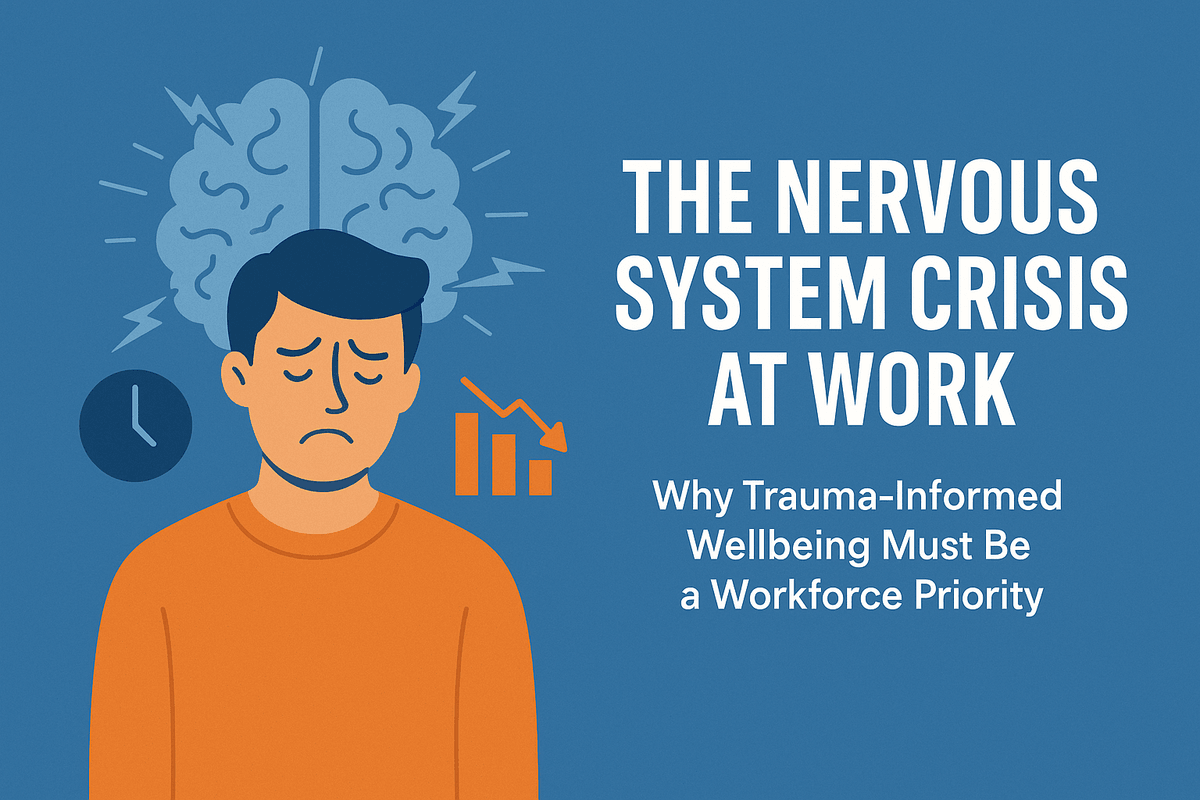
The real disruptor of performance, attendance, and behaviour is physiological burnout, a chronically dysregulated nervous system.
When leaders and employees are overwhelmed, the symptoms show up everywhere: communication changes, problem-solving declines, relationships strain, and sickness absence increases. Workplaces are full of people who are not “misbehaving” but dysregulated, stuck in the physiological consequences of chronic stress and trauma.
This is the conversation employers have not yet had and urgently need.
The Scale of the Problem: Absence and Burnout Are Rising
The statistics paint a stark picture.
· In 2024, the UK lost 148.9 million working days to sickness or injury, around 4.4 days per worker on average.
· CIPD’s 2025 Health & Wellbeing report shows employees are now taking 9.4 sick days per year, almost double pre-pandemic levels.
· The financial impact is enormous: sickness and presenteeism are costing UK employers an estimated £85–£103 billion per year.
· And each sick day costs an average employer around £120 in lost profit.
These trends reflect something deeper than flu season or occasional stress. They signal a workforce whose nervous systems are overwhelmed.
And that overwhelm doesn’t start with employees alone. It starts, quietly, at the top.
How Stress in Business Owners Shapes Entire Teams
When a business owner or senior leader is burned out, the ripple effect can be felt throughout the organisation.
Leaders set the emotional tone of a workplace. Their nervous system becomes the “weather system” that everyone else unconsciously adjusts to.
When leaders are dysregulated:
· decision-making becomes reactive
· communication becomes sharper or withdrawn
· the workplace feels tense or unpredictable
· employees avoid difficult conversations
· sickness absence increases
· presenteeism becomes the norm
· creativity and collaboration break down
This isn’t about blame or weakness. It’s about biology. Stress is contagious, neurologically, emotionally, behaviourally.
A leader experiencing chronic stress is not simply managing a heavy workload. They’re carrying a deregulated nervous system that triggers fight-or-flight in the people around them. And when entire teams operate from that state, burnout becomes inevitable.
Why Traditional Wellbeing Strategies Are No Longer Enough
Most wellbeing programmes focus on cognitive tools: resilience workshops, mental health first-aiders, employee assistance programmes (EAPs), mindfulness apps.
These all have value, but they miss a critical truth:
You cannot cognitively fix a physiological problem.
When someone is overwhelmed, traumatised, or in chronic fight-or-flight, the part of the brain responsible for logical processing goes offline. Talking-based interventions often fail because the body is not regulated enough to receive them.
This is why Scotland’s workplace wellbeing landscape is no longer just about education or policy.
It’s about neuroscience.
If employees, or leaders, are dysregulated, no amount of coaching, training, or strategy will resolve the underlying issue. The nervous system must be supported first.
What the Nervous System Crisis Looks Like in Real Workplaces
Workplaces today are full of people who:
· appear calm but feel constantly on edge
· wake up exhausted, no matter how early they go to bed
· find themselves snapping, withdrawing, or avoiding situations
· feel unsafe or overwhelmed during feedback or conflict
· struggle to make decisions they would previously make with ease
· call in sick due to emotional or physiological shutdown
· feel ashamed for not “coping” the way they used to
In HR terms, these show up as:
· behaviour issues
· performance concerns
· absence patterns
· interpersonal conflict
· reduced engagement
· higher turnover
In trauma-informed terms, these are symptoms of dysregulation, not personality flaws.
And until workplaces understand the difference, they will continue to invest in the wrong solutions.
Why Trauma-Informed Practice Is Becoming a Workforce Essential
A trauma-informed approach recognises that:
· behaviour is often a nervous-system response
· overwhelm is physiological, not personal
· emotional regulation requires more than conversation
· people perform best when they feel safe
· wellbeing strategies must include the body, not just the mind
This is where somatic and non-verbal approaches come in. Techniques that calm the nervous system, breathwork, grounding, sensory regulation, meditation, stillness
practices, or NADA acupuncture, offer a way to stabilise people physiologically so they can engage cognitively.
This isn’t alternative wellness. This is workplace neuroscience.
When people regulate, performance returns. When the body calms, the mind follows.
What Employers Must Do Next
To meet the needs of today’s workforce, Business leaders need to understand:
· the neuroscience of stress and burnout
· the signs of a dysregulated employee
· why talking-based interventions often fail in moments of overwhelm
· how to embed trauma-informed practice into everyday interactions
· the role of nervous-system regulation in attendance, behaviour, retention, and performance
Workforce wellbeing can no longer sit on the periphery of organisational strategy. It must be embedded into leadership, line management, and daily culture.
Because when the nervous system crisis is ignored, absence rises. When the nervous system is supported, everything improves.
A New Vision for Workplace Wellbeing in Scotland
Scotland’s employers are at a crossroads.
They can continue to rely on outdated wellbeing models that address only the mind, or they can embrace a trauma-informed, neuroscience-aligned approach that supports the whole human.
The organisations that evolve will see:
· reduced absence
· stronger relationships
· calmer, more resilient teams
· clearer decision-making
· healthier leadership
· improved culture
· better performance
· people who actually thrive
Workplaces are full of people who look “fine” but whose nervous systems are exhausted. The sooner we recognise this, the sooner we can create working environments where humans, and organisations, can function at their best.
The views expressed in this article are the author’s own and do not necessarily reflect Saltire Sentinel’s editorial stance.